Craftdot
An Honest Guide to Craft Glue
Five glues, what each is actually for, how long it really takes to dry, and when not to reach for it. No brands, no hype.
On this page
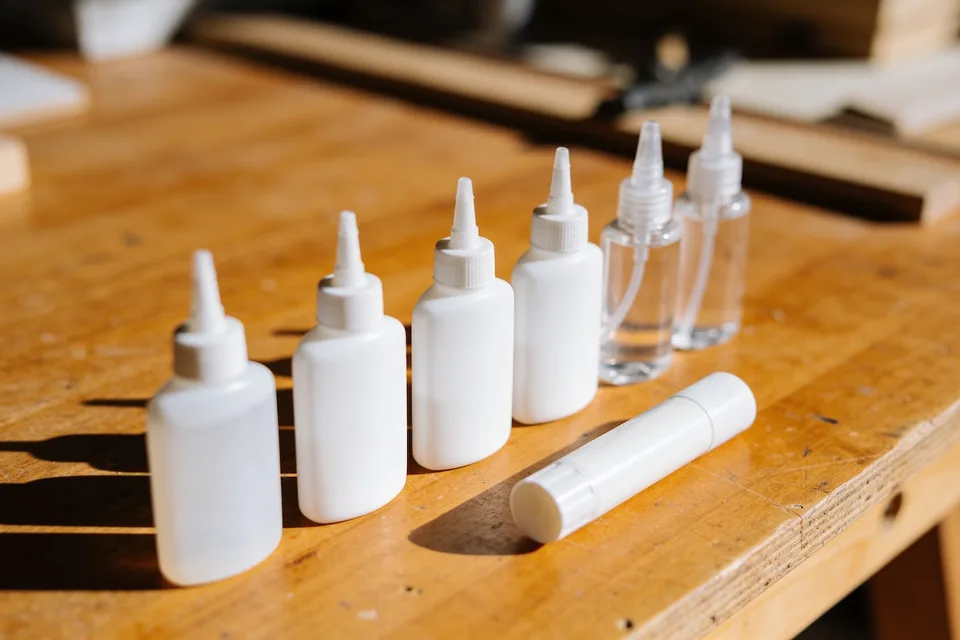
A lot of ruined paper projects come down to the glue rather than the maker. The wrong adhesive wrinkles the paper, lets the pieces slide, or gives up a week later. Here is what each one is genuinely for.
Five types cover almost everything. You probably own three of them already.
White glue
The cheap white bottle. Water-based, dries clear, grips paper, card, wood and fabric.
Dry time: tacky in five to ten minutes, properly cured overnight.
Use it for: wood, card, thick paper, anything with a bit of weight where you can leave it under a book. It is also the base for papier-mâché, thinned with water.
Do not use it for: thin paper. This is the big one. White glue is mostly water, and thin paper drinks it, swells, then dries wrinkled and buckled. No amount of pressing afterwards flattens it out. It is also slow to grab, so anything vertical will slide while you watch.
Spread it thin. A thick bead takes much longer to dry and squeezes out at the edges.
Glue stick
Solid, twist-up, forgiving. Underrated by people who last used one at school.
Dry time: minutes, and it never really cures hard.
Use it for: thin paper on paper. Scrapbook layers, cut-outs, collage, temporary positioning. It puts almost no moisture into the sheet, so the paper stays flat, which is where white glue lets you down.
Do not use it for: anything load-bearing, anything that must last years, or anything that will live somewhere warm. A glue stick bond gives up eventually, and a sunny window speeds that up. Also skip it on glossy or coated card, where it barely grips at all.
Work from the middle outward, and cover the corners properly. A lifted corner is usually a corner you missed rather than a bad stick.
Tacky glue
Thicker white glue, and the most useful bottle on our table. Grabs fast, sags less, still dries clear.
Dry time: grabs in about a minute, firm in thirty, cured overnight.
Use it for: the awkward middle ground, so small embellishments, ribbon on card, fabric to card, anything you need to hold on a slope without clamping. Card stock projects that white glue would wrinkle usually take tacky glue happily.
Do not use it for: very thin paper, still. Being thicker than white glue does not make it dry. And do not use it where you need an instant permanent bond, because you can still move things during that first minute.
Hot glue
A glue gun. Melted plastic, essentially, applied hot and set as it cools.
Dry time: sets in under a minute. People like that about it, and it also catches them out.
Use it for: three-dimensional assembly, awkward joins, foam, fabric, florals, anything bulky where a visible bead does not matter. It will hold combinations of materials that most other glues will not.
Do not use it for: flat paper work. The bead is thick, so pieces sit proud of the surface, and the heat curls thin paper on contact. Not for anything that will get warm, either, because a hot car undoes a hot glue join. And it burns. Properly burns, and the glue sticks to skin while it does. Keep a bowl of cold water on the table, and keep small hands on a different job.
Super glue
Tiny tube, thin liquid, unforgiving.
Dry time: seconds. There is no repositioning.
Use it for: small, hard, non-porous repairs, so a snapped plastic clip, ceramic, or metal findings on jewellery. One drop, held for thirty seconds.
Do not use it for: paper or card. It soaks straight through and leaves a hard, discoloured stain on the front. Do not use it on anything you might need to take apart, and never use it in a closed room with your face over the work, because the fumes catch the back of your throat. Ventilate.
What we actually reach for
For paper, a glue stick. For card and small parts, tacky glue. For structures, hot glue. Those three cover nearly everything we make.
A worked example: the beginner paper star tutorial is a glue stick job from start to finish, while the paper leaf garland for a fall mantel wants tacky glue for the leaves and nothing hot anywhere near them.
Before you go
Before you glue anything, check whether you need glue at all. A scored fold, a slot, or a strip of tape often holds better and looks cleaner, and the score, don't cut card fold removes glue from card making almost entirely.
Buy small bottles. Glue goes off in the cupboard, and a big bottle just gives you more to throw away.
Common questions
Which glue should I use for paper?
A glue stick, for anything thin paper on paper. It puts almost no moisture into the sheet, so the paper stays flat, where white glue, which is mostly water, makes thin paper swell and dry wrinkled. For card and small parts reach for tacky glue, and for three-dimensional assembly hot glue. Those three cover nearly everything.
How long does each craft glue take to dry?
Super glue sets in seconds, hot glue in under a minute, and a glue stick in minutes, though it never really cures hard. Tacky glue grabs in about a minute, is firm in thirty, and cures overnight. White glue is the slow one, tacky in five to ten minutes and properly cured overnight, so leave the work under a book.
Can I use super glue on paper or card?
No. It soaks straight through and leaves a hard, discoloured stain on the front. Paper wants a glue stick and card wants tacky glue. Save the super glue for small, hard, non-porous repairs like a snapped plastic clip, and ventilate while you use it, because the fumes catch the back of your throat.