Craftdot
How to Score Card Stock So It Folds Without Cracking
Card stock cracks when you fold it. Score the line first with an empty ballpoint or bone folder and get a crisp spine every time. Five minutes to learn.
On this page
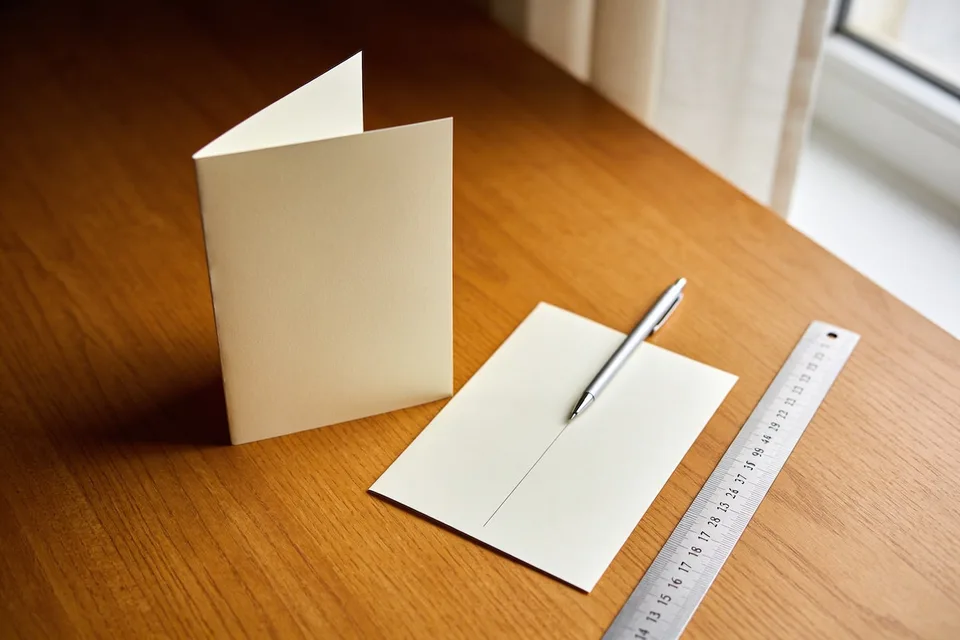
You will finish this able to fold card stock without the white crack down the spine. It takes five minutes to learn, and only a few seconds a card after that. The tool is a pen you already own and have run dry.
The problem is that paper folds and card stock breaks. Thick card has layers, and bending it dry snaps the outer fibres, which is the pale ragged split you see on every homemade card. Scoring crushes those fibres into a channel first, so the card folds into a groove instead of tearing across one.
What you need
- Card stock, anything from about 200gsm up. The heavier it is, the more this matters.
- A bone folder if you have one. An empty ballpoint pen if you do not, and it is genuinely just as good.
- A metal ruler. A plastic one works but nicks over time.
- A cutting mat, or a magazine, or anything with a little give under the card.
Do not use a craft knife. You are trying to dent the card rather than cut it, and with a blade those are one slip apart.
Steps
-
Test your pen on a scrap first. Scribble until no ink comes out at all. One faint blue line down the spine of a finished card is not recoverable, so check before you touch the good stock, every time. If it still marks, use a bone folder or the rounded back of a butter knife instead.
-
Find the grain. Tear a small offcut of your card in both directions. One tear runs straight, one tear wanders, and the straight one is the grain. Score and fold along the grain if the card lets you. Against the grain still works with a score, but the spine will never be as sharp.
-
Mark the fold line with two light pencil ticks. One near the top edge, one near the bottom. Do not draw the whole line; you would have to erase it later.
-
Line the ruler up on the ticks and hold it down hard. Press with your whole palm, fingers spread. The ruler sliding mid-stroke is the usual way this goes wrong, and a doubled score line shows on the finished card.
-
Run the pen down the line in one pass. Firm and steady, from top edge to bottom edge, right against the ruler. You want a visible dent you can feel with a fingertip, not a hole, not a tear. One pass. A second pass rarely lands in the same channel and gives you a fuzzy double groove.
-
Fold with the groove on the outside. This is the part everyone gets backwards. The scored channel goes on the outside of the fold, the side that stretches, so the crushed fibres open into the bend rather than being squashed further. Bring the two halves together and let the card find the score itself.
-
Set the crease with the bone folder. Lay the folded card flat and run the flat of the folder along the spine, working from the middle outward. Put a scrap of paper between the folder and the card if the surface is coated or dark, or you will burnish a shiny stripe.
When it still cracks
Three usual causes. Your score was too light, so press harder, because you are aiming to dent, not to graze. You folded with the groove on the inside, so check step 6. Or the card is very heavy and very dry, in which case score both sides: one line on each face, exactly aligned, then fold. That last trick will rescue most of the really heavy stock.
One variation
Score three parallel lines a few millimetres apart at the spine and you get a rounded, book-like hinge instead of a single sharp fold. It is how a card with a thick insert closes flat instead of gaping open. Score all three, fold each one gently in the same direction, then close the card.
Before you go
Score a whole stack of blanks in one sitting while the ruler is already set. Folded blanks store flat, so the next birthday card is mostly done before you start.
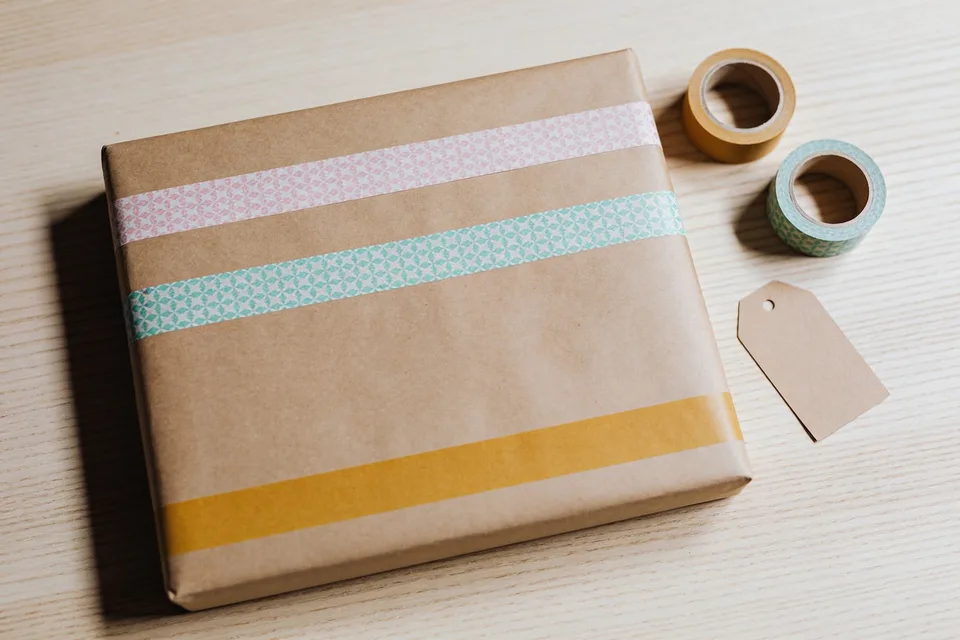
A crisply folded card deserves a matching parcel, and washi tape gift wrap is about as quick while looking like you went to some trouble. Add a five-minute printable gift tag and the whole set matches. If the fold itself is new ground, the scored spine is also the fifth of the five paper folding techniques every crafter uses, sitting alongside the four it builds on.
Common questions
Do I need a bone folder to score card stock?
No. An empty ballpoint pen is genuinely just as good, and you probably own one that has run dry. Scribble on a scrap first until no ink comes out at all, because one faint blue line down the spine of a finished card is not recoverable; if it still marks, the rounded back of a butter knife works instead. The one tool not to use is a craft knife, because you are trying to dent the card rather than cut it, and with a blade those are one slip apart.
Does the scored line go on the inside or the outside of the fold?
The outside. This is the part everyone gets backwards. The scored channel goes on the side that stretches, so the crushed fibres open into the bend rather than being squashed further. Bring the two halves together, let the card find the score itself, then set the crease with the flat of a bone folder, working from the middle of the spine outward.
Why does my card stock still crack after scoring?
Three usual causes. The score was too light, so press harder, because you are aiming for a dent you can feel with a fingertip, not a graze. You folded with the groove on the inside, which squashes the crushed fibres further instead of letting them open. Or the card is very heavy and very dry, in which case score both sides, one line on each face exactly aligned, then fold. That last trick rescues most of the really heavy stock.