Craftdot
Paper Folding Techniques: Five Folds That Cover Almost Everything
Valley, mountain, accordion, gate, and a scored spine. Learn the five folds that sit underneath almost every paper project. Twenty minutes with scrap paper.
On this page
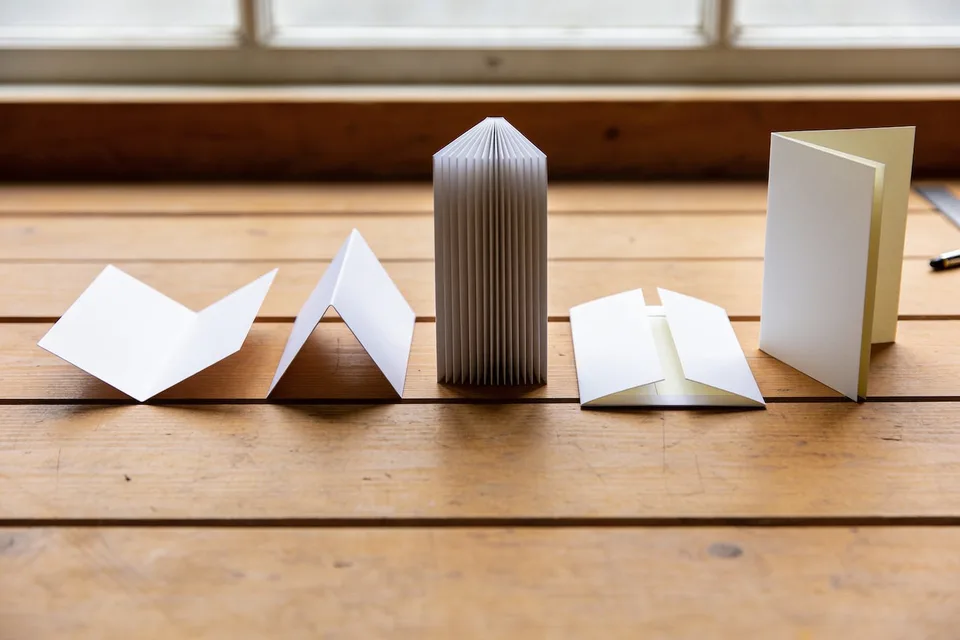
You will finish this able to read any paper craft instruction without stalling. Five folds cover almost everything: valley, mountain, accordion, gate, and a scored spine. Twenty minutes, five sheets of scrap paper, no project attached.
This is deliberately not a project. Learn the folds cold on paper you do not care about, and every project after this gets faster.
What you need
- Five or six sheets of scrap paper. Printer paper is perfect.
- One sheet of card stock, if you have any, for the last fold.
- A bone folder, or an empty ballpoint pen, or the back of a butter knife.
- A hard table. Folding on carpet or a cushion is why folds go soft.
Steps
-
Valley fold, the fold that makes a trough. Bring the bottom edge up to meet the top edge and press down. Hold the edges together with one hand while you sweep the crease flat with the other, working outward from the centre. If you crease first and align second, the edges will not match. Look at it side-on: the crease sits at the bottom of a V. That is a valley.
-
Mountain fold, the same fold seen from behind. Take a fresh sheet and fold it away from you instead, so the crease rises into a ridge. That is all a mountain is: a valley flipped over. Diagrams mark valleys with a dashed line and mountains with a dash-dot line, and when a diagram fights you, the fix is usually to turn the paper over rather than to fold it differently.
-
Accordion fold, so valley, mountain, valley, mountain. Fold the bottom edge up about two centimetres. Flip the sheet, fold the same amount again, flip, repeat to the top. The gotcha bites here: fold against the previous crease each time, not against a mark you measured. Any error compounds down the sheet, so a small drift on the first pleat shows up as a visible wedge by the last one. Pinch the last fold, let go, and it should spring open like a fan.
-
Gate fold, two doors meeting in the middle. Fold the sheet in half, crease only lightly, and open it back out; that centre line is a guide, not a fold. Now bring the left edge in to meet it and crease hard. Bring the right edge in to meet it and crease hard. Two flaps meet down the middle like shutters. Undershoot rather than overshoot. A hairline gap down the centre looks intentional, whereas flaps that overlap just look like a miss.
-
Scored spine, the fold that saves card stock. Card stock cracks rather than folding. Lay a ruler where the fold goes and run an empty ballpoint down the line, pressing firmly enough to dent the surface without tearing it. Then fold along the dent, ridge outward. You get a clean straight spine instead of a ragged white split. It is the fold that makes a homemade card look properly made.
The one habit that fixes all five
Press hard once rather than going over it again and again. One firm pass with a bone folder or your thumbnail does more than a lot of anxious rubbing, which only burnishes the paper and greys it. Work from the middle of the crease outward each time so trapped air escapes at the edges.
Fold with the grain when you can. Tear a scrap of your paper in both directions: one tear runs straighter than the other, and that straighter direction is the grain. Folds along the grain come out sharp. Folds across it fight back and fluff up.
One variation
Combine the accordion and the gate on one sheet and you have a basic pop-out card blank: accordion-pleat a narrow strip, glue one end inside a gate-folded cover, and the pleat springs open when the doors do. That is the mechanism behind a lot of pop-up cards, built from two folds you now know.
Before you go
Keep your five practice folds on the table for a day and refold them cold, without reading anything. Doing it once more from memory is what makes them stick.
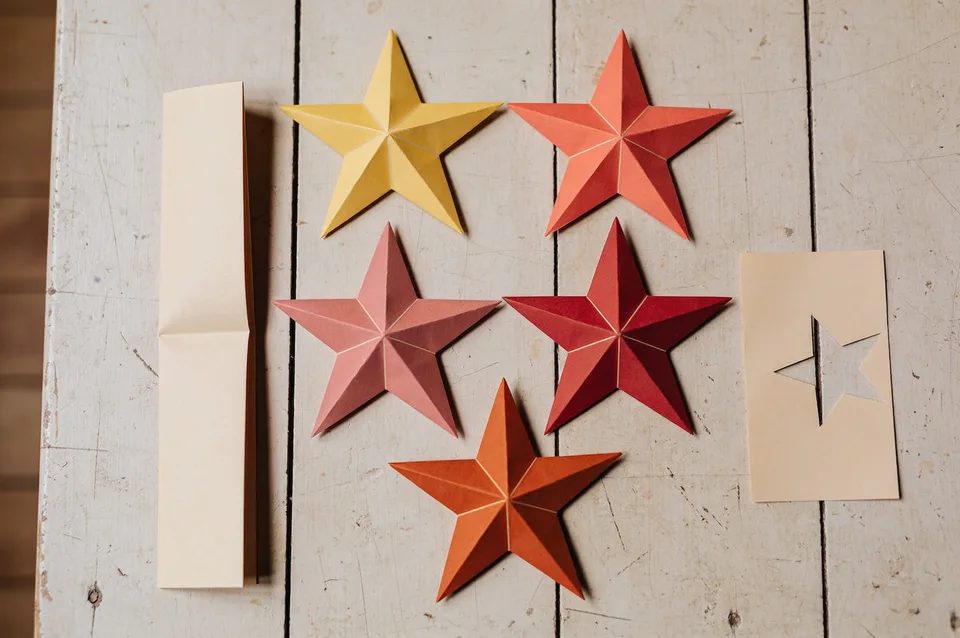
The scored spine deserves its own ten minutes, and we go deep on pens, pressure and which side to fold toward in how to score card stock. For a project that puts valley and mountain to work straight away, the beginner paper star needs nothing but folds and one snip. And if you want ruled paper to practise even pleats on, the free dot grid paper pack prints straight lines for you to fold against.
Common questions
Do I need a bone folder to get sharp creases?
No. An empty ballpoint pen or the back of a butter knife does the same job, and one firm pass with your thumbnail works too. Pressing hard once matters more than the tool, since going over a crease again and again only burnishes the paper and greys it.
Why does card stock crack when I fold it?
Card stock cracks rather than folding, so score it first. Lay a ruler where the fold goes, run an empty ballpoint down the line, pressing firmly enough to dent the surface without tearing it, then fold along the dent with the ridge outward. You get a clean straight spine instead of a ragged white split, and it is the fold that makes a homemade card look properly made.
Why do my paper folds come out soft instead of crisp?
Usually the surface or the grain. Fold on a hard table, because folding on carpet or a cushion is why folds go soft, and work from the middle of the crease outward so trapped air escapes at the edges. Paper also has a grain: tear a scrap in both directions and the straighter tear shows the grain. Folds along the grain come out sharp, while folds across it fight back and fluff up.